
FIBERGLASS POOLS · UTAH GUIDE
A finished shell, delivered to your backyard.
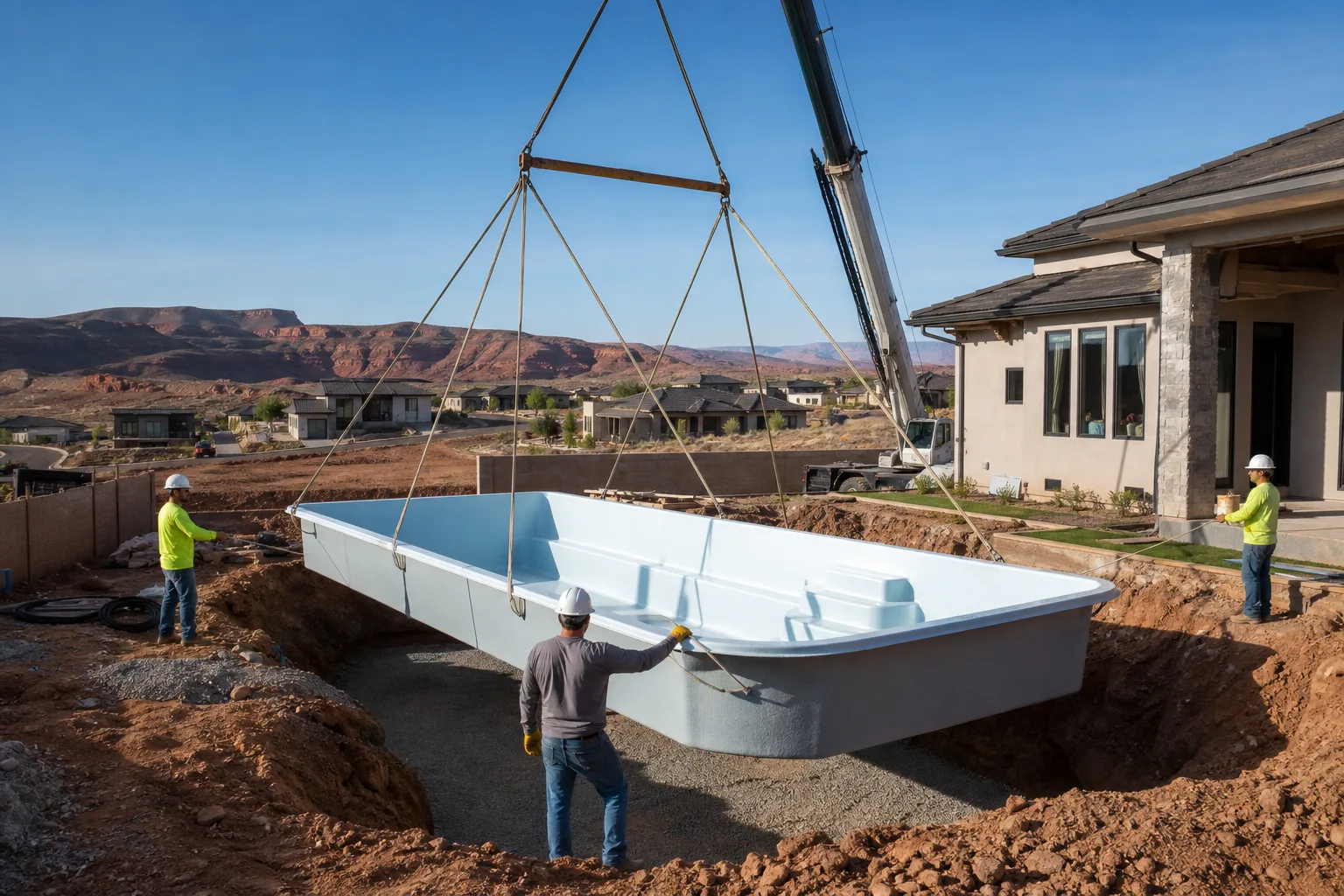
Fiberglass pools are molded in a factory, transported in one piece and set into a prepared excavation—making them attractive when installation speed and a smooth surface matter more than unlimited geometry.
Custom Pools Utah’s primary build paths are custom concrete, package concrete and ICF. Fiberglass availability should be confirmed for the specific project and service area.
HOW IT IS BUILT
The pool arrives as a manufactured shell.
Instead of building the water-retaining shell in the yard, a fiberglass manufacturer creates it in a controlled factory environment. The installer prepares the excavation and base, sets the shell, connects plumbing, backfills and builds the surrounding deck.
That shift can make the shell-setting phase much faster. The tradeoff is that size, shape, depth, steps and ledges come from the manufacturer’s mold catalog—and the shell must physically reach the backyard.
WHY PEOPLE CHOOSE IT
The advantages—without pretending there are no tradeoffs.
A faster shell-setting phase
The finished shell arrives in one piece, reducing the amount of structural work performed in the backyard.
Smooth, nonporous surface
The factory gelcoat feels smooth and generally gives algae fewer pores and texture to grip than cementitious finishes.
Consistent factory geometry
Steps, benches and ledges are formed in a controlled mold rather than shaped individually in the field.
Less finish work on site
The shell arrives with its water-facing surface complete, so there is no plaster application phase.
CONSTRUCTION METHOD
From the backyard to a finished pool.
Choose the shell
Select a manufacturer model whose dimensions, depth, entries and features fit the property and intended use.
Plan delivery & excavate
Confirm the truck and crane path, then prepare the excavation, base, drainage and equipment layout.
Set, plumb & backfill
Lower the shell into place, establish level, connect plumbing and coordinate filling with proper backfill.
Deck & start up
Complete the bond beam or collar, coping, deck, equipment and water commissioning.
This method moves up the list if…
- A shorter installation is a leading priority
- A manufacturer’s existing shape fits the yard and lifestyle
- A smooth factory surface is appealing
- The property has a workable delivery and crane path
The tradeoffs deserve equal attention.
- Shapes, sizes and depths are limited to available molds
- Wide shells require careful trucking, access and crane planning
- Highly integrated spas, infinity edges and sculpted features can be less flexible
- Repairs, groundwater control and backfill quality require fiberglass-specific experience
THE UTAH LENS
What matters for a fiberglass pool in Utah
Before falling in love with a shell model, confirm whether it can reach the backyard. Side-yard width, overhead utilities, walls, neighboring structures, crane placement and street access can decide whether the installation is practical.
Rocky excavation, drainage, expansive soils, groundwater and freeze protection still matter even when the shell is factory-made. The installer’s base, backfill and winterization plan are critical parts of the project—not small details after delivery.
COMMON QUESTIONS
Straight answers before the first dig.
Are fiberglass pools faster to install?+
They can be because the structural shell arrives complete. The total project still includes design, permits, excavation, delivery, plumbing, backfill, decking, equipment and inspections.
Can a fiberglass pool be customized?+
Colors, equipment and surrounding features can be personalized, but the shell’s core shape, depths, steps and ledges come from an existing mold.
Do fiberglass pools work in colder Utah climates?+
They can when the project is properly designed, installed and winterized. Soil, drainage, groundwater, frost conditions and equipment protection still require local planning.
Is fiberglass lower maintenance than concrete?+
Its smooth, nonporous gelcoat can simplify brushing and algae control. Every pool still needs circulation, sanitation, cleaning and balanced water chemistry.
KEEP COMPARING
See how the other pool structures work.
Latham: fiberglass and vinyl options for Utah · Latham: fiberglass, concrete and vinyl comparison. Manufacturer sources describe their own systems; final suitability depends on the selected product, installer, site and engineering.