Faster wall construction
Lightweight modular forms are easy to move, stack and modify. They stay in place after the pour, reducing the formwork setup-and-removal cycle.
 CUSTOM POOLS UTAH IN & OUT POOLSQuick quote
ICF pool construction combines a steel-reinforced concrete wall with built-in insulation—giving Utah homeowners a faster, more efficient path to a custom concrete pool.
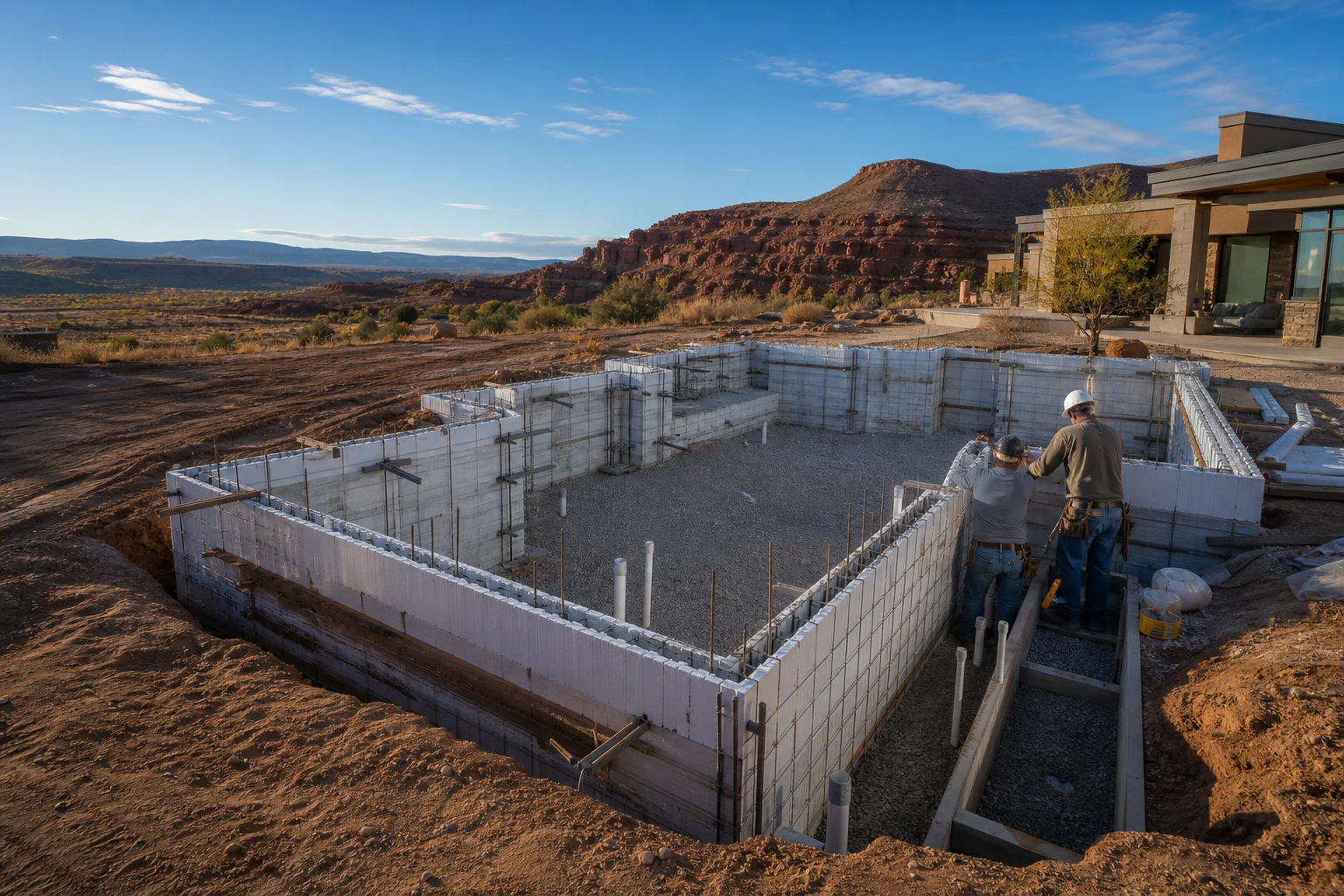
Lightweight insulated forms are stacked into the pool shape, reinforced with steel and filled with concrete. The forms stay in place, creating the structure and thermal break in one coordinated wall system.
For the homeowner, the appeal is simple: an engineered concrete pool, a streamlined wall-building process and less heat moving through the sides of a heated pool.
Lightweight modular forms are easy to move, stack and modify. They stay in place after the pour, reducing the formwork setup-and-removal cycle.
Continuous foam helps slow heat transfer through the walls. Pair it with an insulated floor and automatic cover for a more complete temperature-control strategy.
The structural wall is steel-reinforced concrete—engineered for the pool, the site and the loads around it.
ICF works especially well for modern geometric pools, raised walls, infinity edges and many custom shapes, with radius walls possible when planned correctly.
The lightweight ICF blocks create the pool walls quickly without building and later stripping conventional wall forms.
Steel and concrete create the engineered structure while the forms remain as continuous insulation.
The approved interior finish, coping, equipment, deck and features turn the insulated shell into the finished backyard.
Experienced crews can stack ICF walls rapidly, with less heavy lifting and no need to remove the forms after concrete placement. The complete pool still includes excavation, engineering, inspections, plumbing, equipment, finishes and decking.
A 38,000-gallon Missouri pool case study reported five days for ICF installation and eight weeks saved versus the project’s alternative construction plan.
A 90-foot Fox Blocks infinity-pool case study reported eight days to install the ICF portion of its highly customized shell.
ICF’s continuous insulation reduces heat moving through the pool walls. That is especially valuable for heated pools, northern Utah projects and homeowners who want to open earlier in spring or stay comfortable later into fall.
The best-performing plan combines insulated walls, an insulated slab, an automatic cover and correctly sized heating equipment. The cover remains essential because the water surface is usually the largest source of heat loss.
Match the pool, structure, equipment and features to the home, site and thermal goals.
Shape the site and prepare the foundation, drainage and insulated floor strategy.
Build the ICF walls, install steel and penetrations, then place the structural concrete.
Complete the interior, coping, deck, equipment and water features, then commission the pool.
It can shorten the wall-forming portion of the shell because the lightweight forms stack quickly and remain in place. The full schedule still depends on design, excavation, inspections, concrete, finishes, decking and equipment.
ICF can reduce labor and temporary formwork while combining structure and insulation. Final price still depends on the design, site, finish, equipment and availability of an experienced ICF pool team.
The insulated walls and floor can reduce conductive heat loss and help stabilize water temperature. Actual savings depend on climate, setpoint, cover use, wind and heating equipment.
Yes. Geometric pools, raised spas, vanishing edges, radius walls and many custom features can be designed with ICF. Highly sculpted caves and organic rock work may still favor conventional shotcrete in selected areas.
Benefits and construction guidance reviewed from Fox Blocks, the ICF Manufacturers Association, ICF Builder’s Condor case study and Nudura’s Ozark case study. Manufacturer performance claims and case-study schedules are examples, not guarantees for a Utah project.